Not Set
The Admiralty armed trawler Kingston Alalite was sunk by a mine off Plymouth.
Type
Royal Navy armed trawler
History
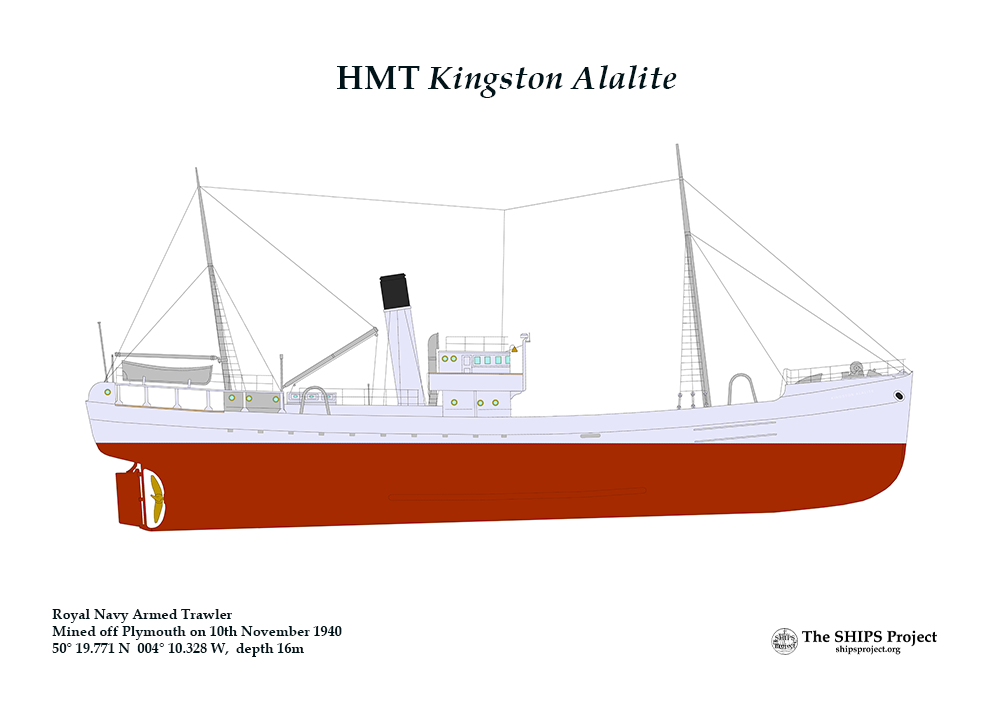
Drawing of the armed trawler HMT Kingston Alalite, click the image for a larger version
The Kingston Alalite was a distant water fishing trawler built in November 1933 by Cook, Welton & Gemmell of Hull, constructed with sister ships Kingston Andalusite (H15) and Kingston Alexandrite (H7). They were built in Hull for the Kingston Steam Trawling Co. Ltd., Kingston-Upon-Hull, registered as H538.
At the start of the Second World War, the ship was requisitioned by the Admiralty as an anti-submarine vessel on 11 August 1939 as FY136, she was fitted with a deck gun on her bow, and she joined the 9th anti-submarine group based at Devonport. Between 26th May and 4th June 1940, she was at Dunkirk as one of the Little Ships used to rescue British troops escaping from the German invasion of France in WWII.
By November 1940, she was back in Plymouth dealing with the aerial mines dropped by the German IX Air Corps. During that month, a total of 866 mines were dropped by German aircraft in the Thames and Humber estuaries, off Newcastle, Pembroke, Plymouth, Falmouth, Penzance, Bristol, Liverpool, Harwich, Milford, Swansea, and Cardiff. On 10th November 1940, CinC Western Approaches estimated that there were at least 15 mines within one mile of the Breakwater lighthouse. That day, the trawler St. Melante (FY753) detonated a mine and was damaged, but the Kingston Alalite was sunk by a mine in Plymouth Sound in a location that had been swept and passed over by several minesweepers that day.
According to Chief Engineman C. Smith, the Alalite had been heading into the harbour at full speed under the command of R. A. Read, RNR. Smith was in the engine room when he heard a big explosion from somewhere forward. The ship was immediately plunged into darkness as the electrical power failed, the hull started taking on water, and she began listing to port. Smith quickly escaped up a ladder to the deck, he cut away the Carley floats and jumped into the water, where several others scrambled on a float with him. The ship broke in two and sank in about 2 minutes. As she went under, there was a second explosion, thought to be the boiler.
Six people died when the ship sank, including 52 year old Ernest Sparkes (LT/JX210967) from Grimsby who was the mate on board and John Mair Buchan (LT/JX185835), a seaman in the Royal Naval Patrol Service, seaman Stanley Collins R.N.R. (LT/X. 21633A), telegraphist R. H. Cutler, Ordinary seaman James Colin Eastland (24), Leading Seaman Arthur John Rogerson R.N.R. (LT/X. 21424A), while ten others were wounded.
The position of the ship was recorded at the time as being 242° 5.7 cables (1056m) from the Breakwater light at the western end of the Breakwater. The ship had sunk in the middle of the main entrance to Plymouth Sound and was a significant hazard to navigation, so salvage operations on the wreck were started and completed in February 1946. In 1969, the site was visited by Navy divers who found ship structure, but none more than 2ft above the seabed. In 1979, diver Peter Mitchell reported that the site was ‘one, possibly two trawlers, mostly wood, standing 12-15ft, covered with nets with cork floats’.
Seaman James Colin Eastland is buried at Weston Mill Cemetery in Plymouth.
Diving the Kingston Alalite
In the Western Entrance to Plymouth Sound, to the west of Knap Reef.
The wreck was first dived by Mike Goss, Bill Badge and a diver called ‘Dinger’, but the site was salvaged later by another group of divers. Before the wreck was identified as the Kingston Alalite by The SHIPS Project, it was known as the 'Two Trawlers'. This wreck is rarely dived because it's in the main shipping channel for Plymouth Sound..
A recent side scan sonar survey by The SHIPS Project showed that the site is now partly covered in sand. Reports from divers and geophysical surveys suggest that the site periodically covers and uncovers with sand.
Nearby wrecks include the armed trawler Elk  , the FS Poulmic , the Rame Barge / Leen and HMS Scylla ,
Last updated 20 December 2025


Information
Date Built:
1933
Type:
Steam Trawler
Builder:
Cook, Welton & Gemmell, Yard no. 583
Owners:
Kingston Steam Trawling Co. Ltd., Kingston-Upon-Hull
Official Number:
163172
Length
151ft 7in
Beam
25ft 9in
Draft
14ft 9in
Construction
Steel
Propulsion
111 NHP triple expansion steam engine by C.D. Holmes
Tonnage
412 tons gross, 166 tons net
Nationality
British
Crew
.
Master
R. A. Read, RNR
Owners
Admirlaty, Royal Naval Patrol Service (RNPS)
Portmarks
H538
Date of Loss
10th November 1940
Manner of Loss
Mined
Outcome
Salvaged, abandoned
Reference
HOB ID 1479238, UKHO 17658
Mines and Minesweepers
A significant proportion of our whole war effort had to be devoted to combating the mine. A vast output of material and money was diverted from other tasks, and many thousands of men risked their lives night and day in the minesweepers alone.
Winston Churchill, the Second World War
The Kingston Alalite was one of 120 requisitioned trawlers sunk during World War II from a total of 300 minesweepers that were lost.
Not Set
Leave a message
Your email address will not be published.
Click the images for a larger version
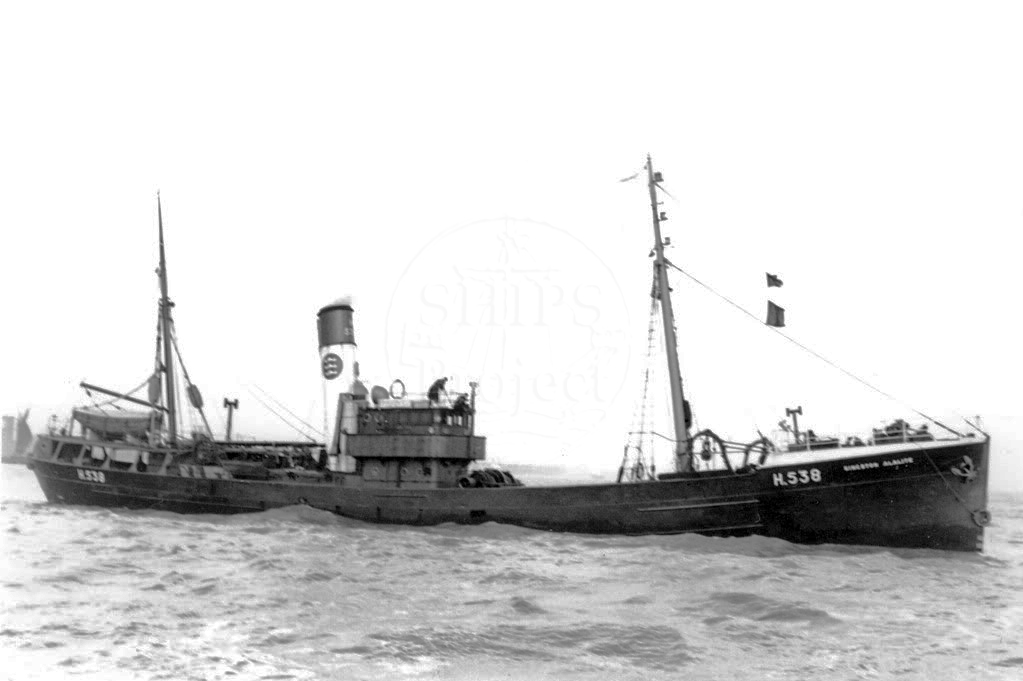
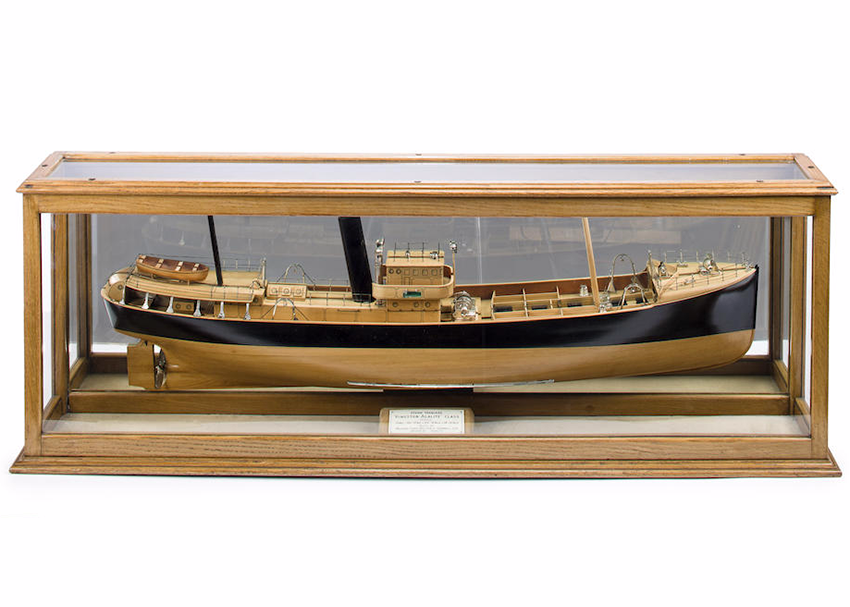
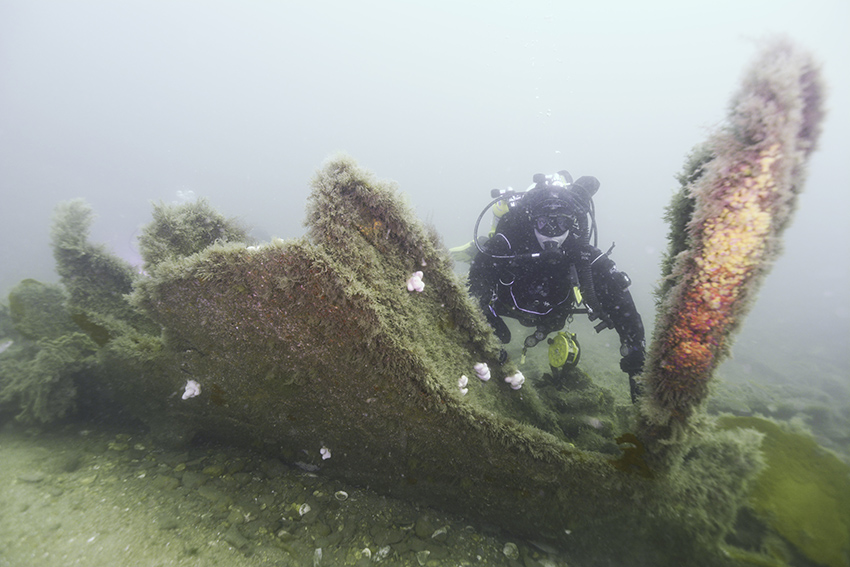
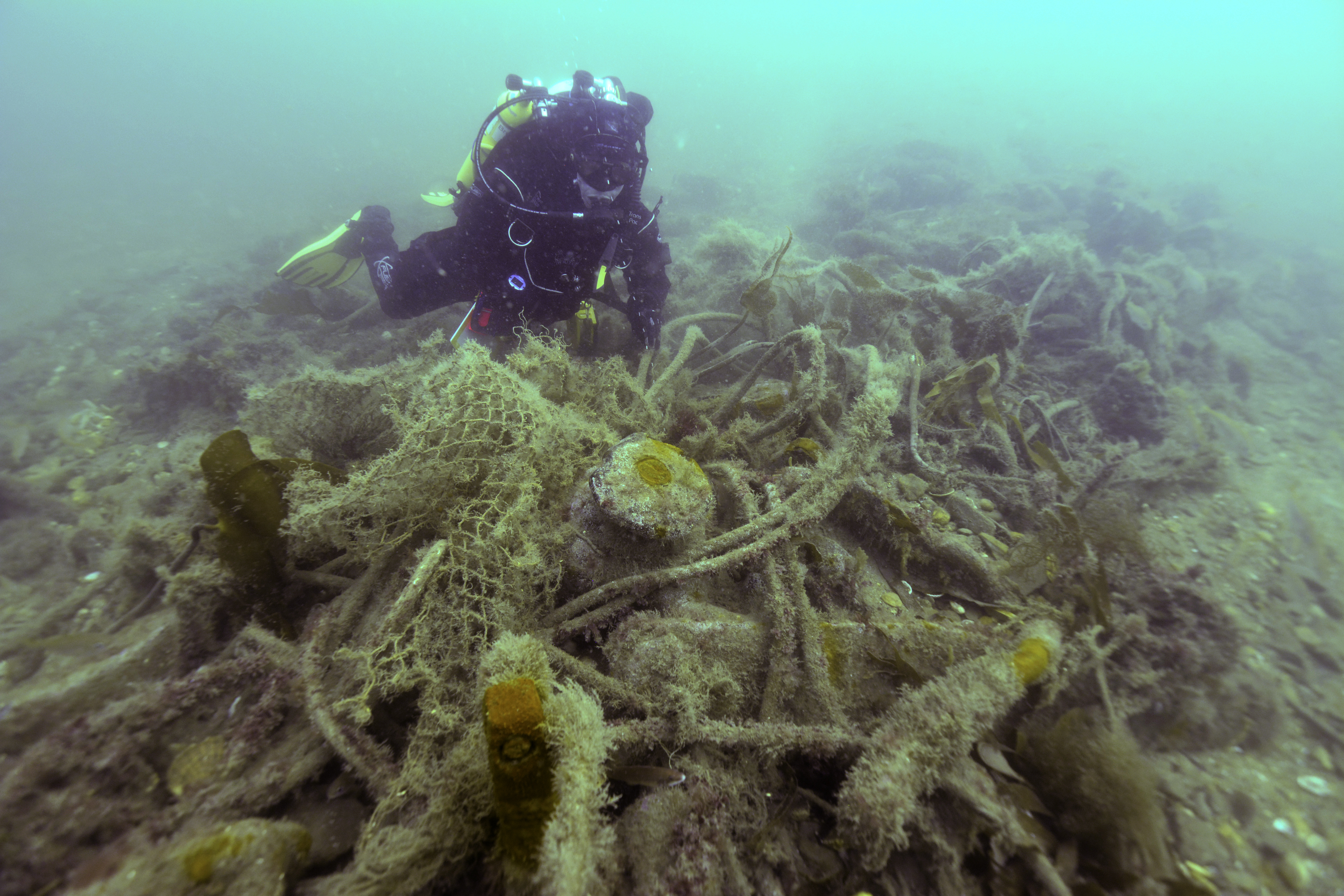
Image use policy
Our images can be used under a CC attribution non-commercial licence (unless stated otherwise).