Not Set
The iron sailing ship Oregon foundered in Bigbury Bay after she struck rocks in shallow water in bad weather under the command of a novice Captain.
Type
Iron sailing barque
History
The Oregon was one of several iron ships built by Mounsey and Foster in Sunderland and launched on 3rd August 1875. Oregon carried all the safety gear required by Lloyd's. She carried four boats, two of which were lifeboats, plus a full complement of anchors.
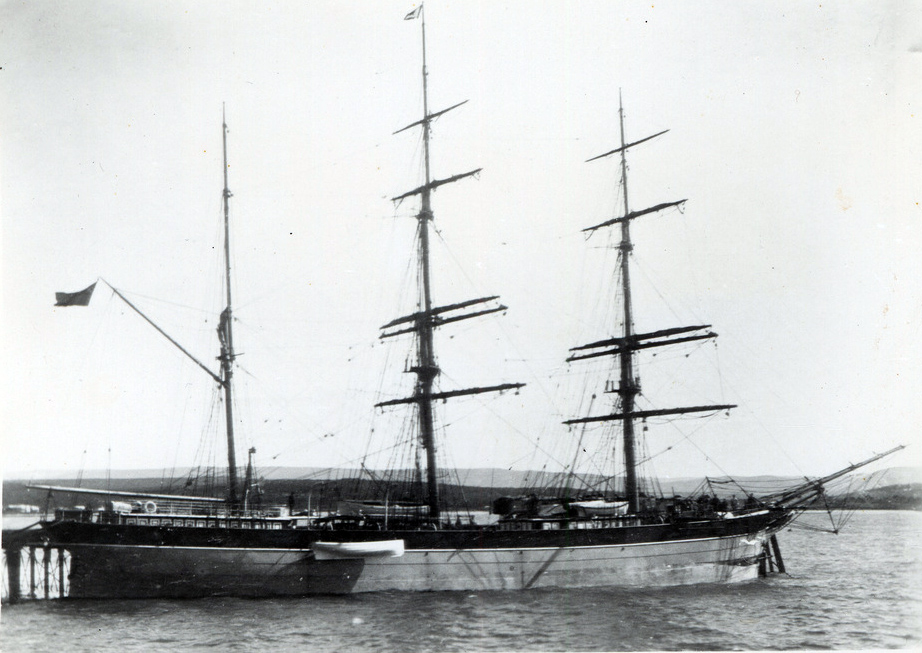
Not the Oregon but her sister ship the Alastor, click the image for a larger version
In September 1890, Oregon was in the port city of Iquique in Chile on the west coast of South America, loading 1200 tons of sodium nitrate. Oregon left on 3rd September 1890 and headed for Falmouth under the command of a new Master, Captain Low, as this was his first voyage on the ship. The ship successfully navigated the dangerous Cape Horn and crossed the Atlantic to arrive at Land's End in Cornwall on 13th December. The Oregon put into Falmouth to receive her next sailing orders; she was bound for Newcastle, so they picked up a pilot to navigate the ship through the English Channel before departing on 18th December.
They left Falmouth and headed into a strong southerly wind and a moderate sea. They headed up Channel and sighted the bright light of the Eddystone lighthouse bearing northeast at 4.15 pm, but at a distance of only one and a half miles. The wind was steadily increasing, and with it, the sea got rougher. Thirty minutes later, the Eddystone was on the same bearing as before, so they were making no progress eastwards. The weather got thicker, the wind and sea increased, and squalls of rain limited their visibility in the dark. Shortly after 7 pm, one of the lookouts saw something dark ahead but wasn’t sure.
They tried to turn the ship around, but when the ship was before the wind, she struck the bottom several times. They managed to complete the turn, and she headed away from the land into deeper water. But the ship was badly damaged when she hit bottom and was taking on water. The pumps were manned, but the water slowly filled the ship. The Master ordered abandon ship, and the crew took to the boats, with the Master the last to leave, and in the poor visibility, the boats soon lost sight of the sinking ship. The crew kept the boats’ head to the waves all night to stop them from swamping, and in the morning they headed for land and came ashore all safe at Hope Cove in Devon. The Oregon had sailed off into the night; nothing more was seen of her, no wreckage came ashore, so she had simply disappeared (5).
As with all ship losses, there was an inquiry, and that for the Oregon was held on 10th January 1891. The inquiry found that the Master was negligent in not realising that he was not managing to achieve his intended course, and that tide, currents and leeway were pushing his ship close to land. They did note that he dealt with the accident in a seamanlike way, so the Captain was allowed to keep his master's certificate. In summing up, the Judge said that Low failed from want of professional experience; he was ‘too much of a student and too little of a sailor’.
The whereabouts of the Oregon remained a mystery until 1965. A report of a fisherman’s snag in Bigbury Bay led dive boat skipper Paddy Inglewick on to the trail of a new dive site. Divers from the Kingston branch of the BSAC were the first to see the wreck in 1965. The first pair down landed on an iron wreck lying on its keel on a flat, sandy seabed. The wreck was mostly collapsed flat, but the bow and stern looked recognisable. They dived the site again later in the week and confirmed that there was no engine or boiler, so they had found an iron sailing ship. The remains of the ship’s wheel were still on the quarterdeck, and the number 1875 was cast into the copper alloy wheel boss. Enquiries made to the Hydrographic Office and Lloyd’s suggested that their wreck was the Oregon, a ship launched in 1875, matching the date on the wheel boss.
This is a condensed version of the story. For more information, please contact The SHIPS Project.
Diving the Oregon
Bigbury Bay, south.
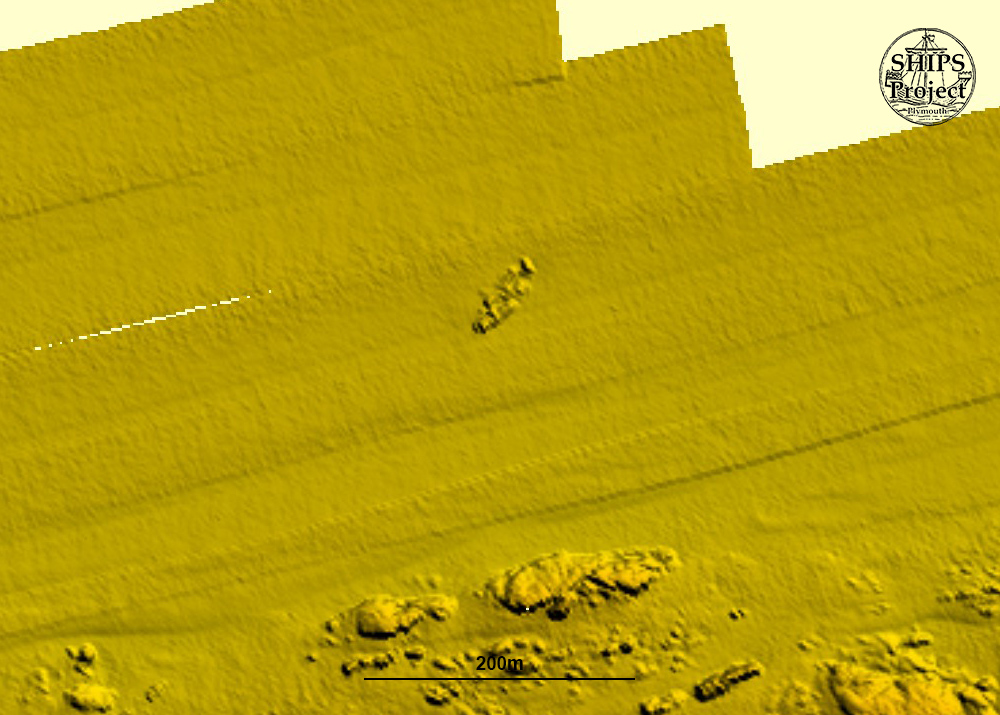
A multibeam sonar image of the Oregon on the seabed
The remains of the Oregon are much the same as when they were found in 1965, except that the hull structure has collapsed even further, so now lies flatter on the sandy seabed at 34m with her bow to the southwest. A large area of rock reef lies 150m to the south. Iron preserves very well underwater, and the site has not been salvaged, so most of the original 60m long hull lies on or partly buried in the seabed, collapsed onto its starboard side.
The bow lies on its starboard side, and the anchor, windlass and hawse pipes can be seen. Further aft is the remains of the forward cargo hold and the lower part of the iron foremast, a steel cylinder of unknown purpose and a cargo winch. Aft again is the remains of the huge 21m long mainmast, a mast hoop, and the aft hold coaming. The stern also lies on its starboard side, where you can find the rudder post and steering gear, while the rudder lies flat on the seabed. The wreck is draped in nets, so some of the features have been moved around by trawl gear dragged across the site. The hull plates are covered in pink sea fans, which are a protected species, so please avoid damaging them.
The site is best dived after a spell without rain as outflow from the River Avon can reduce visibility.
Nearby wrecks include the Persier  , the Marie and the Totnes Castle .
Last updated 4 April 2026


Information
Date Built:
3rd August 1875
Type:
Barque
Builder:
Mounsey and Foster, Sunderland, yard No. 74
Official Number:
73394
Length
59.3m (194.4ft)
Beam
9.6m (31.5ft)
Depth in Hold
5.6m (18.5ft)
Construction
Iron
Propulsion
Sail, barque rig on three masts
Tonnage
843 GRT, 801 Net
Nationality
British
Crew
18
Master
Captain Low(e)
Owners
G. Welch & G. Rollo, Dundee
Tay Whale Fishing Co., Dundee
Robert Kinnes, Dundee
Cargo
Sodium nitrate
Portmarks
None
Voyage
Iquique in Chile to Newcastle upon Tyne
Date of Loss
18th December 1890
Manner of Loss
Foundered
Outcome
Abandoned
Reference
UKHO 18097, HER MDV71243
.
Not Set
Leave a message
Your email address will not be published.
Click the images for a larger version
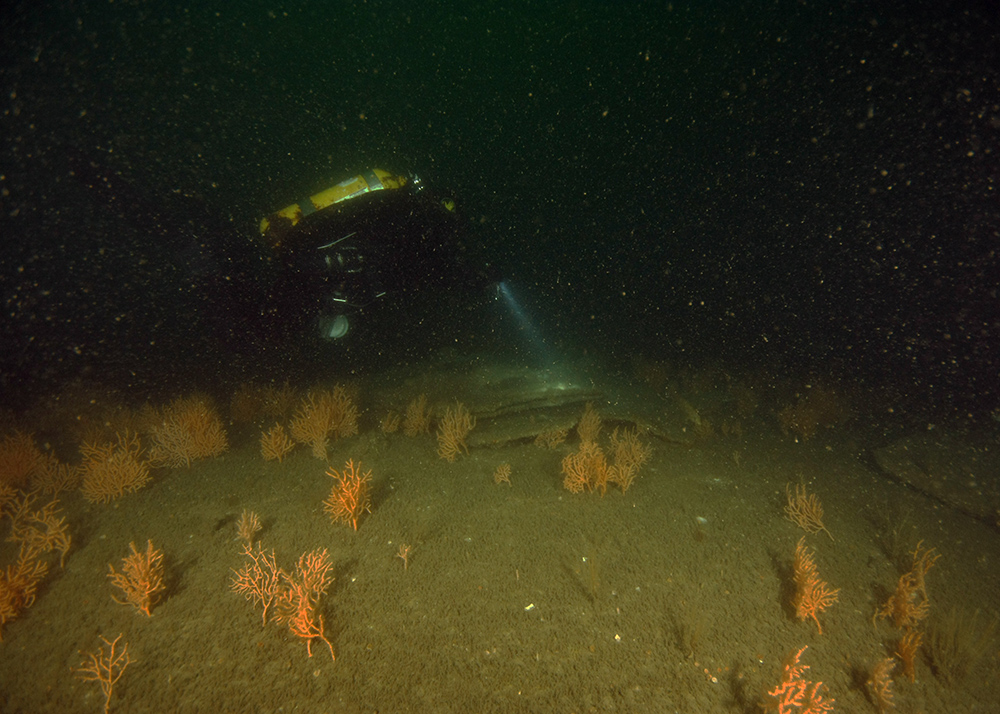
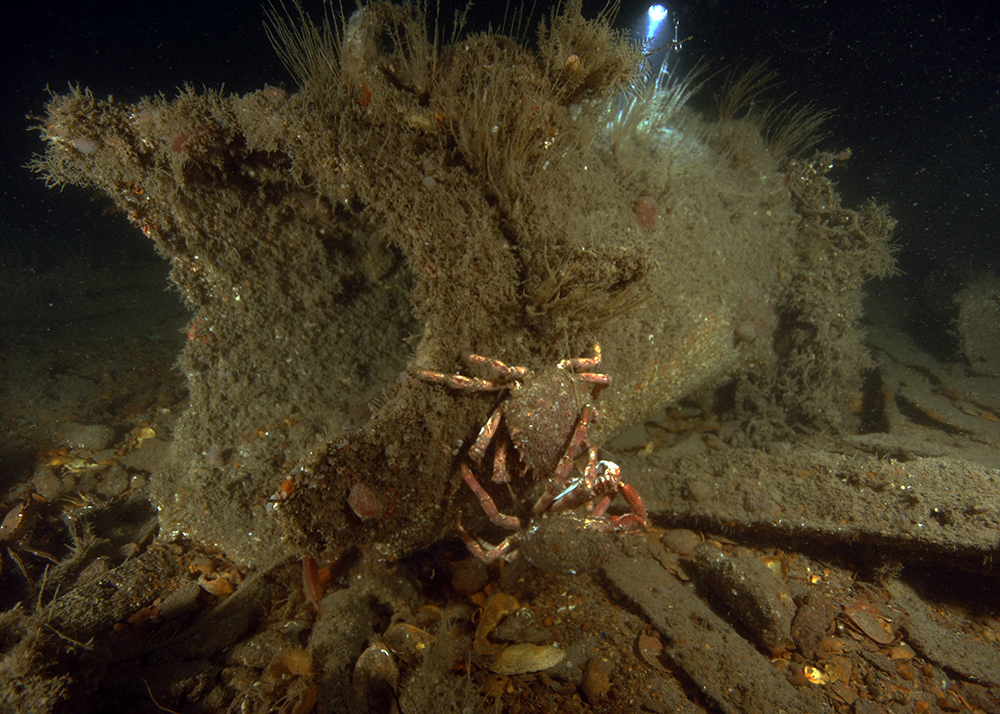
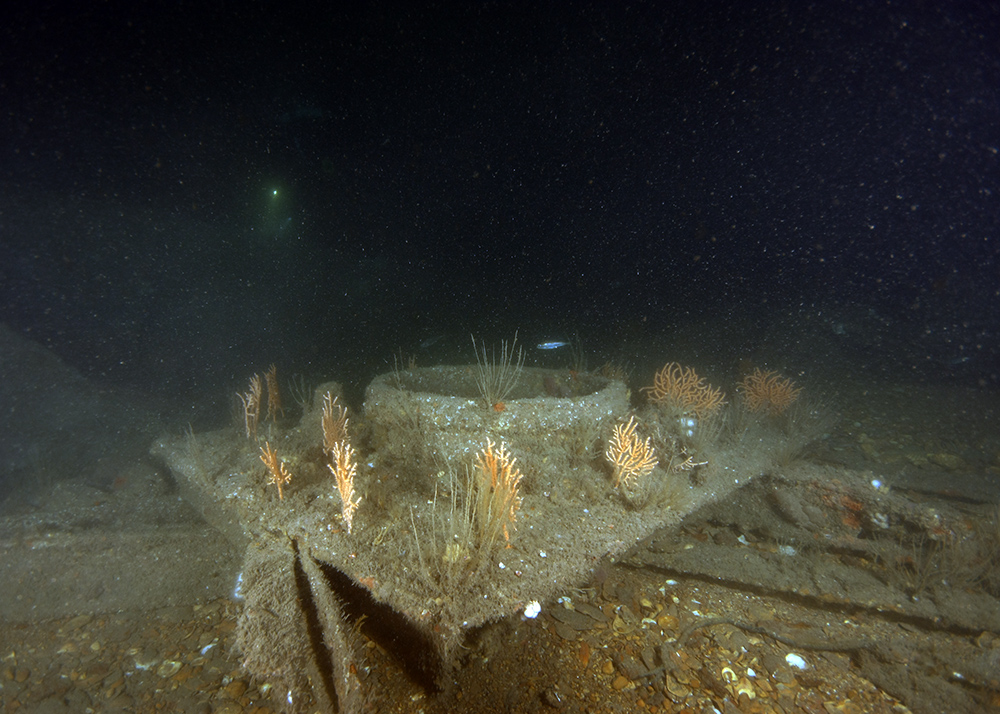
Image use policy
Our images can be used under a CC attribution non-commercial licence (unless stated otherwise).